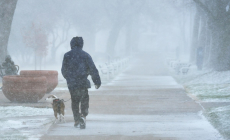
Freeze warnings are in effect across parts of the Midwest as a late-season cold spell brings sub-freezing temperatures to multiple states, according to the National Weather Service (NWS)
The warnings currently in place show that wintry conditions are continuing in some areas, even as others see unseasonal warmth. Such contrasts are typical in spring but can still cause disruption.
What To Know
The agency said most of southeast Michigan was under a freeze warning and that temperatures there could dip to 18 degrees Fahrenheit.
The Detroit/Pontiac office said freezing conditions were expected overnight into Monday morning, posing a risk to vegetation and outdoor infrastructure.
Warnings extended across a swath of the central United States. The National Weather Service issued freeze warnings covering parts of Ohio, Indiana, Illinois, Iowa, and Kansas, with many areas expecting overnight lows in the 20s and low 30s Fahrenheit.
In Ohio and Indiana, freeze warnings were in effect from 2 a.m. to 10 a.m. ET Monday, with temperatures as low as 29 to 31 degrees forecast, the agency said. In Iowa, forecasters said temperatures could drop to around 22 degrees, while parts of Illinois and Kansas were expected to see lows in the mid-20s.
The agency warned that “frost and freeze conditions could kill crops, other sensitive vegetation and possibly damage unprotected outdoor plumbing.”
Similar warnings were issued farther west and south, including in Colorado and parts of Texas and Oklahoma, where subfreezing temperatures were also recorded or forecast, according to the NWD.
Early Summer in Atlanta
The cold snap contrasted with unusually warm weather elsewhere in the country. A NWS Atlanta update posted on April 18 reported that the city reached 90 degrees Fahrenheit, marking what was described as the earliest 90-degree reading on record there since recordkeeping began in 1878.
Meanwhile, winter conditions persisted in Alaska, where the National Weather Service had winter storm warnings in place for several regions. Forecasters said additional snowfall and blowing snow were expected, which could make travel difficult in affected areas.
Meteorologists say such temperature swings are not uncommon during spring, when competing air masses can produce sharp contrasts across regions. However, late-season freezes can be especially damaging because they often occur after plants have begun to grow, increasing the risk of agricultural losses.
The National Weather Service will continue to provide updated forecasts and warnings through its website and official social media channels.